As of 30 April 2025, BS 5839-1:2017 has been officially withdrawn and replaced by BS 5839-1:2025, bringing a range of important changes to fire detection and alarm systems in non-domestic premises across the UK. Whether you're overseeing fire safety in a care home, school, office block, or hotel, it's essential that you understand the implications of this revised standard.
We break down the key changes and what actions you should take now to remain compliant.
Design and Installation Enhancements
BS 5839-1:2025 introduces several critical updates aimed at improving the performance and consistency of fire alarm system design:
-
Sleeping Areas: Smoke detectors are now clearly preferred over heat detectors in bedrooms or sleeping areas (e.g. care homes, student accommodation, hotels) to ensure faster detection.
-
Lift Shafts: Category L4 systems must now include detection at the top of lift shafts, improving response time in vertical escape routes.
-
Low-Risk Lobbies: Some lower-risk areas (like toilet lobbies) now require detection depending on system category and risk profile.
-
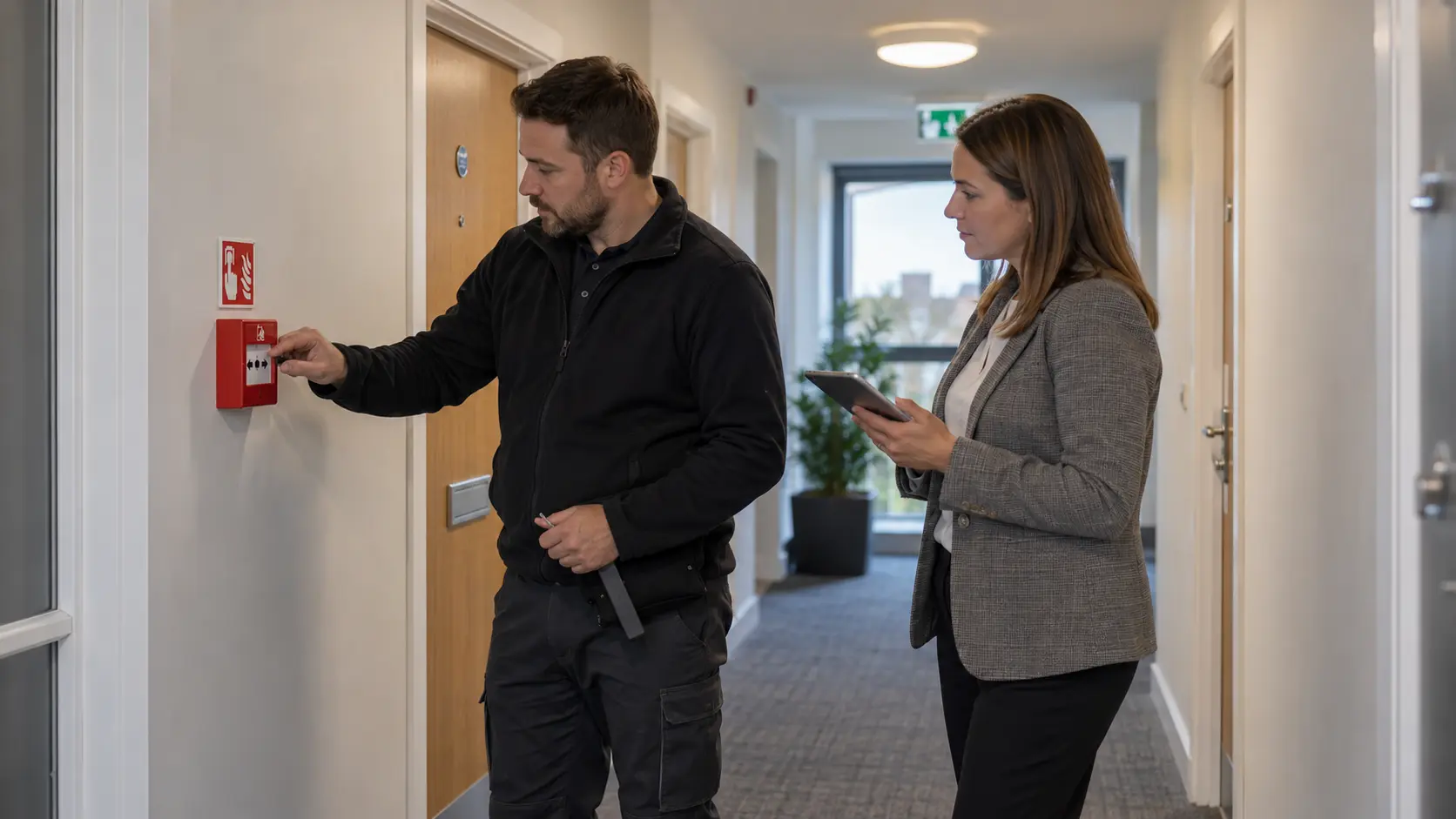
Manual Call Points: Placement guidance has been strengthened, emphasising accessibility in occupied zones.
-
Lockdown Alarms: Systems may now integrate lockdown tones, provided they’re distinct from fire alarm signals.
-
Ceiling Obstructions: Installers must pay closer attention to elements like ductwork or beams that could interfere with detector coverage.
-
New Category L Monitoring Times: L-category systems must monitor activation signals within 90 seconds and detect faults within 3 minutes.
-
Backup Battery Sizing: BS 5839-1:2025 has updated the battery backup calculation formula. Review battery backup capacity, especially for older panels or large systems, to ensure compliance with the new calculation method.
-
Red Mains Cables: It is now explicitly required that fire alarm mains cables be red for clear identification.
-
New Panel Requirement: To help reduce false alarms, fire alarm control panels must now display a ‘False Alarm’ label indicating automatic connection to fire and rescue services.
Maintenance and Servicing Updates
Maintenance is now addressed more robustly to ensure systems are not just installed correctly, but also stay reliable:
-
Servicing Intervals: While 6-monthly servicing remains best practice, the new standard allows a 5–7 month window between inspections without being deemed non-compliant.
-
Control Panel Clocks: These must be checked and corrected at every service visit to ensure accurate event logging.
-
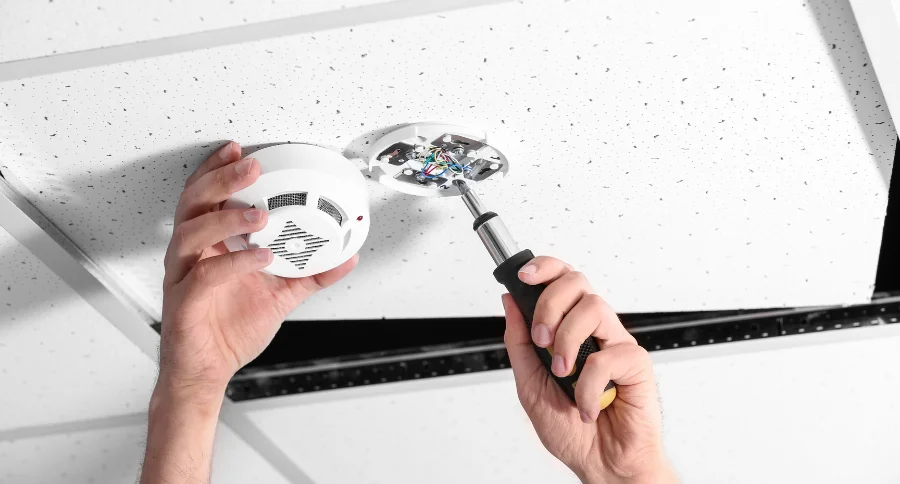
Redundant Equipment: Any detectors or system parts no longer in use must be fully removed, not just disconnected.
-
Interface Accessibility: All interfaces (e.g. lift overrides, fire door controls) must be fully accessible for testing—hidden or blocked panels are no longer acceptable.
-
Logbook Requirements: All deviations from BS 5839-1 (e.g., exceptions, placement compromises) must now be clearly documented in the site’s fire alarm logbook.
-
Engineer Competence: Anyone working on fire alarm systems must now demonstrate ongoing CPD (Continuing Professional Development).
BS 5839-1:2025 isn’t just a technical update — it’s a vital reminder that fire alarm systems must evolve with the risks they’re designed to protect against. Whether you manage a care home or a commercial site, now is the time to review your systems, documentation, and training. Compliance is important, but protecting lives is the real measure of success.
David Brayfield
Certification and Documentation Changes
BS 5839-1:2025 also brings changes to how systems are documented and certified:
-
Updated Certificates: New certificate templates have been issued to match revised clause numbers and terminology.
-
Modifications Section: There’s now a dedicated section for documenting system extensions and upgrades.
-
Terminology Refresh: Some terms have changed – for instance, “care homes” are now referred to as “residential care premises”, and “fire service” is now the “fire and rescue service”.
-
Structural Updates: Clause 4 has been relocated to the introduction, and Clause 33 has been merged into Clause 31. Certificate clause references may need revising.
Talk to us about your fire safety needs
Enhanced Safety Measures
With a growing focus on inclusive safety, the following updates aim to protect a wider range of building occupants:
-
Visual Alarms: Greater emphasis is placed on visual alert devices (VADs), essential for deaf or hard-of-hearing users.
-
Zone Plans: Clearly displayed zone plans are now required in multi-zoned buildings, especially those with sleeping risks.
-
Automated Alerts: In residential care settings, systems must automatically notify a monitoring centre when triggered, speeding up emergency response.
What You Need to Do Now
If you’re responsible for fire safety in a commercial or residential care setting, you should:
-
Review and Update Audit your current fire detection and alarm system. Check whether the design, devices, and documentation still comply.
-
Engage Competent Professionals Use certified fire alarm designers, engineers, and maintainers who maintain CPD, such as those BAFE SP203-1 registered.
-
Update Documentation Revise your certificates, logbooks, and maintenance records to reflect the 2025 standard and any site-specific deviations.
-
Communicate Changes Inform all stakeholders—staff, contractors, and residents—of relevant updates to fire procedures and system layout.
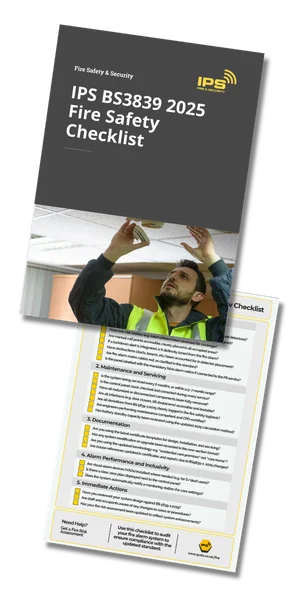
BS 5839-1:2025 Fire Safety Checklist
Understand what the BS 5839-1:2025 update means for your fire alarm system and how to stay compliant.
Ideal for businesses and care providers managing fire alarm compliance.
Need Help?
This is a significant update to commercial fire-safety standards. Contact the IPS team if you’re unsure how BS 5839-1:2025 affects your building or need assistance interpreting its impact on your system design or maintenance programme.
Your next steps might include:
-
A fire risk assessment review
-
A system upgrade audit
-
Staff fire safety training on updated evacuation zones
Are fires rising in your area?
Free check of official fire statistics for your fire and rescue service area.